
“A forklift ran over my foot and hit my knee. They said it was my fault for being in the wrong place. My lawyer said the wrong place was my workstation.”
The Origin of the Claim: Forklift Accident at a Southwest Chicago Warehouse
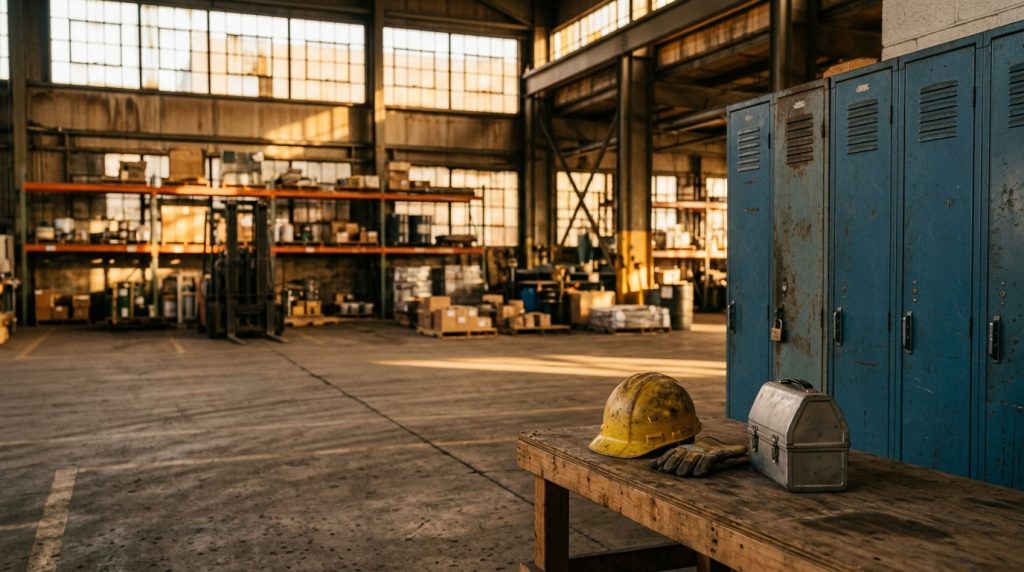
A 27-year-old temp worker was struck by a forklift at a distribution warehouse in southwest Chicago in January 2023. The vehicle — carrying a 1,200-pound pallet — ran over his right foot and struck his left knee while turning in a poorly marked aisle. The diagnosis revealed fractures of the 1st and 2nd metatarsals of the right foot and a grade 2 medial collateral ligament (MCL) tear of the left knee. Two surgeries followed: internal fixation with screws for the foot fracture, and — after 4 months of failed conservative treatment — arthroscopic MCL reconstruction for the knee. At 27, the worker faced the possibility of never walking normally again — let alone returning to the physical work that was his only livelihood.
According to OSHA, forklift accidents cause approximately 85 deaths and 34,900 serious injuries annually in the United States — and Illinois ranks among the top 5 states for such incidents. Twenty-five percent of these accidents involve pedestrians in the warehouse. The majority of victims are temp workers with less than 6 months on the job who received minimal or no safety training. This workplace knee injury was entirely preventable with proper safety measures.
The Obstacles: The Phantom “Exclusion Zone” Defense
The company argued the worker was in a “pedestrian exclusion zone” — an area supposedly restricted to forklift traffic only — and that the accident was a result of his own negligence in entering that zone. The insurer AmTrust used this argument to offer just $11,000 — a figure that barely covered the first foot surgery, leaving the knee untreated. But when the attorneys requested the warehouse’s exclusion-zone map during discovery, the company could not produce it. There was no floor signage, no physical barriers, and no document whatsoever delineating where pedestrians could or could not be. The “exclusion zone” was a fiction created after the accident to evade liability.
Two coworkers testified under oath that: (1) they never received an exclusion-zone map, (2) the area where the accident occurred was a routine pedestrian route because it was the shortest path to the bathroom and break room, and (3) supervisors crossed through that same area every day. The “exclusion zone” — the cornerstone of the company’s defense — collapsed completely under sworn testimony.
Legal Strategy: When the Defense Is a Fabrication
The attorneys at Illinois Compensation requested OSHA records for the warehouse and discovered the facility had 3 active safety violations related to forklift traffic — including lack of pedestrian-aisle signage and absence of safety mirrors at intersections — the exact conditions that caused the accident. OSHA had fined the company for these violations 8 months before the accident, and the company had not corrected them. The pattern was damning: the company knew about the danger, was fined for it, ignored the fix, and then blamed the worker when the predictable accident occurred.
The sworn coworker testimony, combined with the OSHA violation history, transformed the case. The company’s defense shifted from “worker negligence” to damage control — and the insurer’s negotiating position collapsed with it.
The Victory: $60,000 for the Worker Struck by a Forklift
The case settled for $60,000. The settlement covered the foot surgery and knee reconstruction, temporary total disability (TTD) for 11 months of recovery, and permanent partial disability (PPD) for the combined foot and knee sequelae. What began with a company blaming the worker for “being in the wrong place” ended with an agreement that recognized the truth: the place wasn’t wrong — it was unsafe. The OSHA violations the company ignored for months were the real cause. The company ultimately corrected the violations that had gone unaddressed for nearly a year.
With the compensation, the worker completed both rehabilitations without financial pressure. The limp in his foot is minimal but permanent — a scar that will remind him for life of the day he almost lost far more than a job. He has since found employment in a position that accommodates his physical limitations.
Were you hit by a forklift and the company says it was your fault? It’s a standard defense that collapses when we investigate the actual safety conditions. If you suffered a forklift accident, knee injury, foot fracture, or any warehouse injury in Chicago or Illinois, our firm investigates OSHA violations, interviews witnesses, and dismantles fabricated defenses — because the “wrong place” is almost always an unsafe workplace.
Call us today for a free consultation. We don’t back down — and neither should you.